top of page



For all voice users.
A timeless and authentic vocal technique

Voice Method based on vocal physiology and scientific evidence
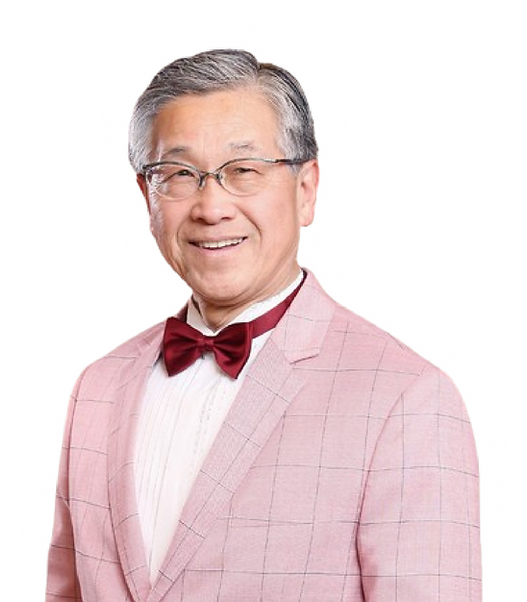
TORU YUBA
news topics

February 14, 2025
Lecture at Saga University (School of Medicine)


November 1, 2025
The 8th competition will be held

YUBAメソッドとは
What is the YUBA Method?
Three steps to "separate, strengthen, and fuse" your inner voice and your natural voice
It's a scientifically backed method that anyone can follow.
The YUBA Method is a systematic voice training method based on the YUBA theory (vocal function anatomy and physiology, vocal control theory), which is the result of repeated practical research.
It separates, strengthens, and fuses the inner voice and the outer voice (chest voice), and efficiently coordinates the sound-generating and articulatory movements, improving vocal and pronunciation abilities. Yuba was one of the first to focus on the cricothyroid muscle and devised a method to control it. This made it possible to rationally control the pitch and tone quality of the voice. He believed that the cricothyroid muscle was extremely important in singing, and so he named it the "singing muscle."
By training these "singing muscles," you can improve not only your singing voice, but your speaking voice as well! The YUBA Method is based on research, but those who actually train don't need to learn complex anatomical knowledge. It 's a simple method that just requires you to "imitate . " *By "imitate," we don't mean simply imitating the voice of Toru Yuba, as recorded on the CD or DVD.
Just as there are many different tenor singers with different voices, each person is born with a different voice quality. This voice quality is determined by factors such as the length of their vocal cords, bone structure, and resonant chamber. In the YUBA Method, "impersonating a voice" does not mean imitating the instructor's unique voice quality, but rather listening to the voice being uttered and distinguishing whether it is a "main voice," a "breathed back voice," or a "breathless back voice," as well as how much of each is distributed and mixed, and then imitating the degree to which they are mixed.

Six vocal skills you can acquire with the YUBA method

Can sing a wide range
You can adjust the volume while singing
Sing with accurate pitch
Sing a long song in one breath
Sing with clear pronunciation
You can sing while changing the tone

How the YUBA Method is used
Singing education at kindergarten, elementary, junior high and high schools
Professional voice creation using the voices of singers, announcers, voice actors, etc.
Voice training for all singing genres, including vocals
Not only does it correct tone deafness, but it also helps prevent voice disorders, improves post-operative speech, and improves voice anti-aging.
Post-operative improvement of voice disorders in medical settings

Toru Yuba
Toru Yuba [alias: Kaoru Iwanaga]
・Voice researcher, vocalist (tenor)
・Developer of the new vocal technique "YUBA Method" ・Director of the YUBA Method Research and Training Center, Seifu Gakuen ・Professor Emeritus, Mie University ・Visiting Professor, Teachers College, Columbia University (2001)
・Visiting Researcher, Faculty of Medicine, University of Tokyo (2002-2008)
・Visiting Researcher, National Hospital Organization Tokyo Medical Center (2013-2016)
・Visiting Researcher at RIKEN (Wako campus) (2015-2020)
・Member of the Japanese Society of Otolaryngology, Japanese Society of Phonetics and Linguistics, Japanese Society of Laryngology
Born in Okito, Hokkaido. Graduated from Osaka Seifu High School and the Vocal Music Department of the Faculty of Music at Tokyo University of the Arts (scholarship admission). Has given concerts and lectures in the United States, Canada, Italy, Brazil, and China, and passed an audition for an opera company in New York, earning a reputation in Westsider magazine as "a first-class singer."

ゆうば
とおる
profile
プロフィール
Based on the YUBA Theory, a vocal theory born from a new scientific perspective, he developed the YUBA Method, a new vocal technique that systematizes the throat as an instrument, paving the way for the world's first scientific correction of tone deafness. With over 1,500 successful cases, the YUBA Method has been introduced to over 110 countries around the world as a representative topic of Japan by the Ministry of Foreign Affairs, and has been reported on TV news in various countries. KITV News, an American abc affiliate, introduced him as "a global authority in the field of speech and language who has developed a revolutionary vocal technique."
His technique was also used in the US public broadcasting educational program "Music Factory," which was broadcast along the Pacific coast. In Japan, his technique has been featured on over 100 television and radio programs, including NHK News, special reports, and science programs, as well as in numerous newspapers and magazines. He has also coached many professional singers, both in Japan and abroad, across a wide range of genres. His research results at the University of Tokyo's Faculty of Medicine were selected to present at the International Otolaryngology Congress, hosted by Seoul National University, in August 2007.
He has been included in the Who's Who World Biographical Dictionary since 2005. He has given special lectures at the Japanese Society of Phonetic and Linguistic Medicine, the Oto-Rhino-Laryngological Society of Japan, the Japanese Tracheo-Esophageal Society, and the Japanese Society of Swallowing Medicine, as well as guest lectures at the Science Council of Japan and the University of Tokyo. He has also given guest lectures, lectures, and workshops overseas at Columbia University, University of Hawaii, Sao Paulo State University, and China University of Political Science and Law. He has also presented his research at the invitation of the Music Educators of America Congress (MENC). Researchers of the YUBA Method are also thriving overseas. The "YUBA Theory" (vocal theory) and the "YUBA Method" (practical vocal method) are included in medical textbooks.


YUBA Method Institute
May 2015, YUBA Method Institute Representative Toru Yuba
May 2015, YUBA Method Institute Representative Toru Yuba
YUBA Method Institute has been restructured into a privately owned company to suit the nature of its business. Business operations will continue as before. We appreciate your continued support of YUBA Method Institute.
YUBA Method
YUBA Method Research and Training Center
YUBA Piano Method
Organization Overview
The YUBA Method Institute is an organization engaged in research into the YUBA Method and the YUBA Piano Method, as well as social contributions such as improving singing and piano playing techniques. Based on scientific practical research, the Institute aims to develop and commercialize content that will be enjoyed by people with singing (professional, general, and tone-deafness correction), voice disorders, keyboard instrument performance, and hand disabilities, and that will be passed down for many years to come.
Institutional Data
Representative Toru Yumiba Established April 1, 2013
Business content
Planning, production and sales of printed materials such as books and magazines, electronic publications such as CDs, teaching materials and educational aids
Holding seminars and lectures
Researcher and professor training and agency
Information distribution via the Internet and various media
Professor and researcher in the field of dementia prevention and improvement
Research into improving communication skills, including language and music



Business content
Instructor
インストラクター
YUBA Method Certified Voice Instructors are experts active throughout the country who have been certified by the YUBA Method Institute and have a deep understanding of the scientifically based YUBA theory and method, and are equipped with the skills to effectively teach appropriate vocal techniques for each audience and purpose.




YUBA Method Children's Songs and Singing Children's Choir Competition


"From an early age, I learned to use sound vocal techniques,
I hope you will enjoy singing for the rest of your life and stay healthy in mind and body."


This competition was born from the ideas of Professor Toru Yuba.

Illustration by
joint research
Xing Co., Ltd.
Department of Information Science and Otorhinolaryngology, Osaka University
YUBA Method Research and Training Center Seifu Gakuen
Study on the mechanism of vocalization to prevent aspiration and vibrato using the YUBA method
Accepted for Kyoto University Grant-in-Aid for Scientific Research (C)
The following projects have been selected for Grants-in-Aid for Scientific Research (KAKENHI) by the Japan Society for the Promotion of Science (JSPS).
Grant-in-Aid for Scientific Research (C) "Elucidation of voice quality based on the laryngeal phonation mechanism and its application to voice therapy"
(Research topic/area number 22K09695)Research representative:
Tsuyoshi Kojima: (Lecturer, Faculty of Medicine, Kyoto University)Co-researcher:
Shintaro Fujimura: (Kyoto University, Graduate School of Medicine, Program-Specific Assistant Professor)
Ryusuke Hori: (Associate Professor, School of Medicine, Fujita Health University)
Yusuke Okaue: (Tenri University of Health Sciences, Faculty of Medical Sciences, Special Researcher)
Toru Yuba (Kaoru Iwanaga): (Professor Emeritus, Mie University)Location: Kyoto University
Accepted for Kyoto University Grant-in-Aid for Scientific Research (C)
The following projects have been selected for Grants-in-Aid for Scientific Research (KAKENHI) by the Japan Society for the Promotion of Science (JSPS).
Grant-in-Aid for Scientific Research (C) "Elucidation of voice quality based on the laryngeal phonation mechanism and its application to voice therapy"
(Research topic/area number 22K09695)Research representative:
Tsuyoshi Kojima: (Lecturer, Faculty of Medicine, Kyoto University)Co-researcher:
Shintaro Fujimura: (Kyoto University, Graduate School of Medicine, Program-Specific Assistant Professor)
Ryusuke Hori: (Associate Professor, School of Medicine, Fujita Health University)
Yusuke Okaue: (Tenri University of Health Sciences, Faculty of Medical Sciences, Special Researcher)
Toru Yuba (Kaoru Iwanaga): (Professor Emeritus, Mie University)Location: Kyoto University
achievements
実績(学会・研究)・共同研究


bottom of page